Talk to us
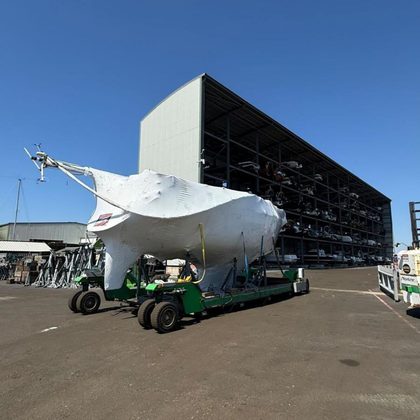
Ashore or afloat, winter or summer
Framed, vented, heat-welded covers that keep sun, salt and Saharan dust off gelcoat, teak and canvas — through the winter refit, the summer lay-up and every lift, move and shipment in between.
Nov – Mar
Lay-up and refit season. Boats come ashore at the yards from November and go back in for spring. Book a cover before she comes out and it goes on the day she’s blocked off.
Book a slotWhat we wrap
In Malta, most of what needs covering floats: a yacht laid up for winter, a hull in the yard for paint, a boat going onto a ship. We come to the marina, the yard or the quay, frame the cover to the vessel and weld it into one skin.
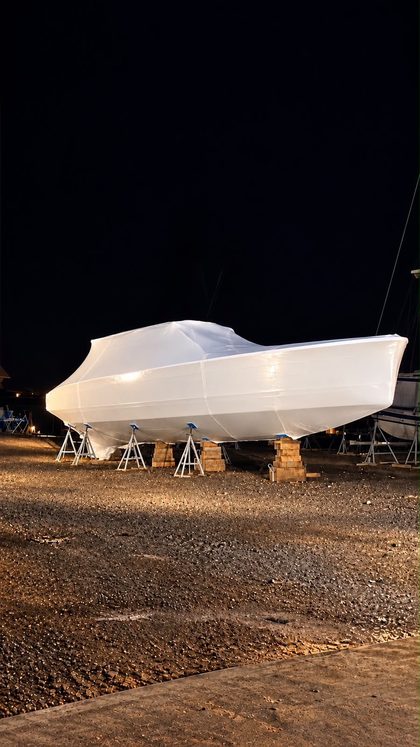
Full covers for motor and sailing yachts, rig up or rig down — framed to shed water and dust, vented for heat, with doors where the crew need to get aboard.
For owners, captains and managers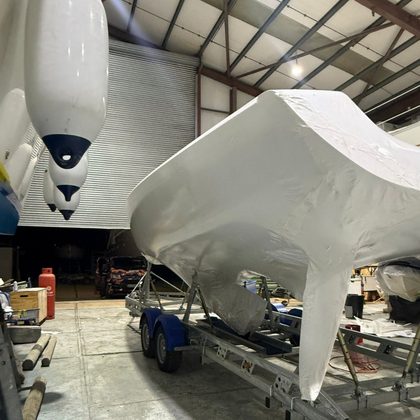
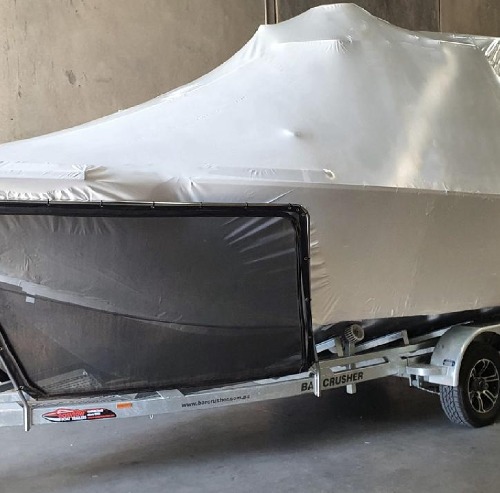
RIBs, day boats, cruisers and tenders, wrapped ashore on the cradle or on the trailer.
For private owners and clubs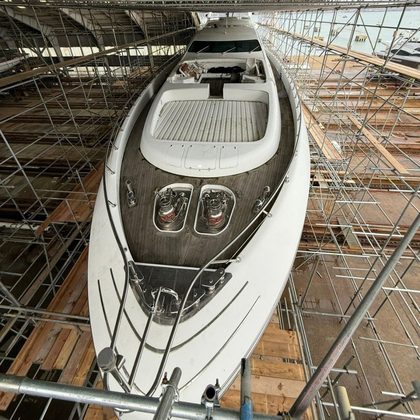
Sealed enclosures so sanding, spraying and blasting stay inside and the weather stays out.
For yards and refit contractors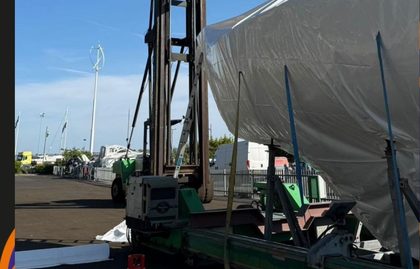
Road moves, deck cargo and export through the Freeport — including tenders shipped out to join their superyacht.
For shippers and delivery crews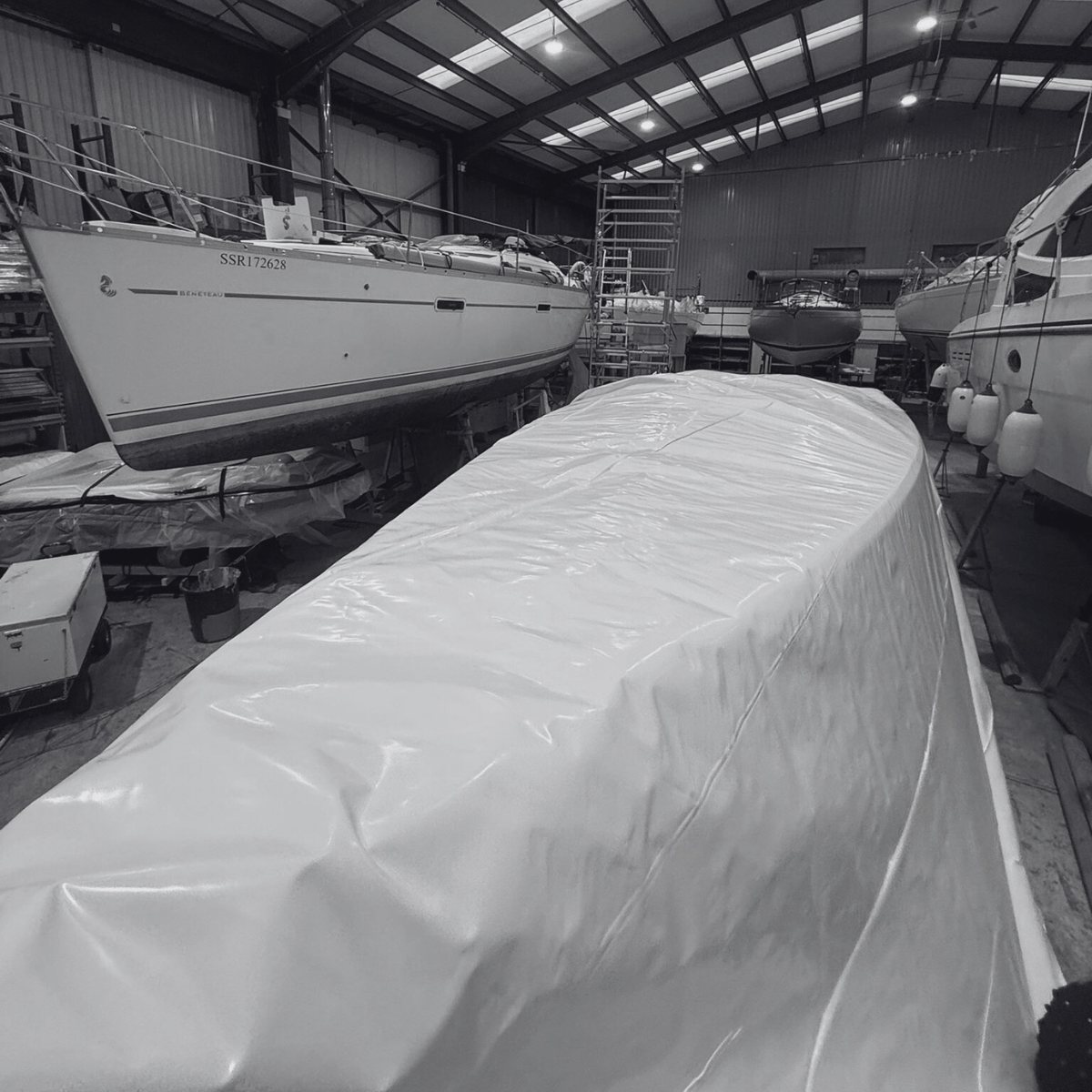
Season-long protection ashore or afloat, winter or summer, taken off and away when she goes back in.
For owners laying up for a seasonSame film, same crews, off the water. Tell us what it is and we’ll tell you straight whether shrink wrap is the right call.
Full wraps over scaffolding for restoration, façade and roofing work — dust in, weather out.
Shrink wrap roofs over scaffold frames so a building stays dry while the roof is off.
Machinery, generators and plant sealed for storage, shutdowns or site works.
Vehicles, plant and aircraft components wrapped for shipping and storage.
The Maltese boat year
A cover in Malta has a different job. It sits through months of hard sun on a hot hard standing, takes Saharan dust on the xlokk and has to hold when the gregale comes through in winter. This is the year it’s built for.
General seasonal pattern. Every year runs a little differently.
White UV-stabilised film reflects the sun rather than soaking it up. The frame holds it clear of the gelcoat and teak, and vents at the high and low points let hot, damp air out instead of baking it in.
The cover is heat-welded into one skin with no laps or gaps, so dust and salt spray settle on the film rather than on the boat. Vents are placed to let the boat breathe without scooping dust in.
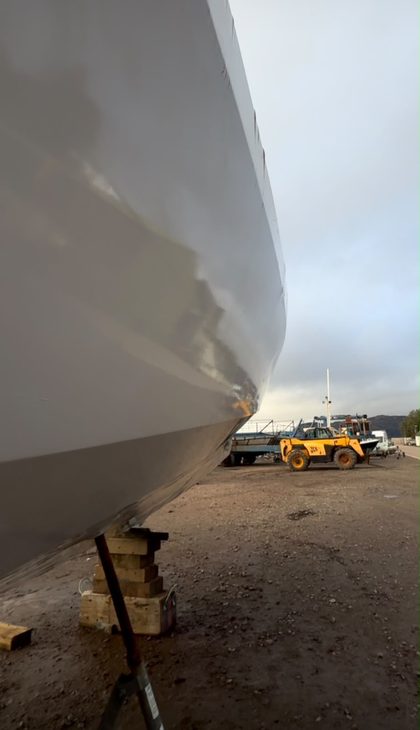
Shrunk tight over a frame and banded to the cradle or the hull, the cover has no loose panels for a north-easterly to get hold of. It doesn’t flap, chafe or work loose through the winter.
How the cover is built
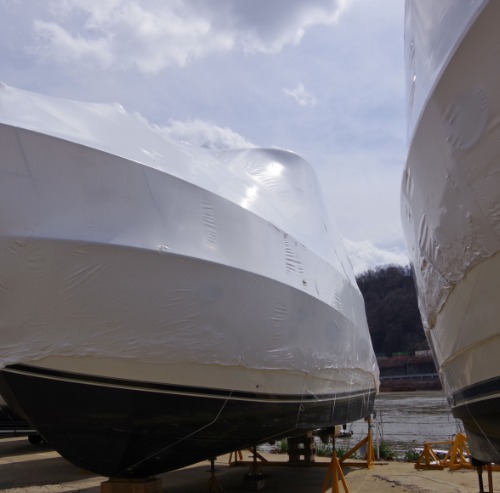
A sheet thrown over a boat traps heat against the gelcoat, lets dust in at every lap and flogs itself to pieces in the first strong wind. A shrink wrap cover does none of that, because it’s built rather than draped.
We put up a frame first so the film stands proud of the rails and canvas. Then the film is welded into a single skin, shrunk tight with heat, vented, and fitted with zipped doors wherever the crew, the surveyor or the yard need to get aboard.
Before we quote
Every job starts with a survey, at the berth or in the yard. We measure the vessel, work out the frame, the film area, the seams and the fixings — and the number you get back is the number you pay. No provisional sums, no "subject to access".
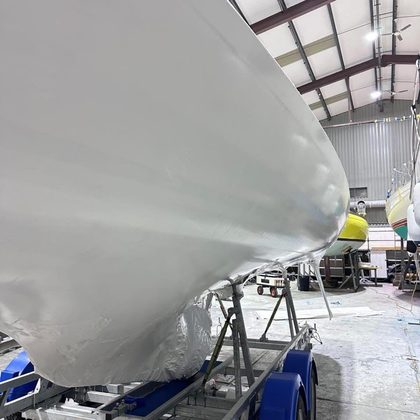
Illustrative figures for a typical 18 m motor yacht. Your survey is done at the berth or yard — or from photos, if you’d rather start there.
Start from your phone
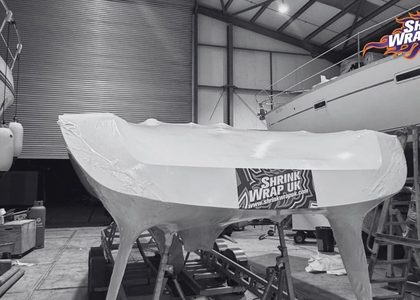
Not every job needs a visit to get going. Send a couple of photos, the length and where she’s berthed, and an installer will tell you what’s involved — including when shrink wrap isn’t the right call.
Whole item in frame, plus one close-up of the access side.
WhatsApp or email, with the marina or yard and the date she comes out.
Approach, timescale and a price, in plain English.
Where we work
Most of the island’s yachts sit within a few kilometres of each other — Msida, Ta’ Xbiex and Manoel Island on Marsamxett, Birgu and Kalkara on the Grand Harbour, Portomaso round the corner in St Julian’s. We cover all of them, the yards at Marsa, the south at Marsaxlokk and the Freeport, and the north from Mellieħa to St Paul’s Bay.
Gozo is a ferry ride away. Crossing time is built into the quote, so a Mġarr berth costs no more to arrange than a Msida one.
How a job runs
Send photos and the length, or we measure her at the berth or in the yard.
The frame, film, vents and doors, in writing. That’s the number you pay.
On the day she’s blocked off or berthed, working to the yard’s or marina’s rules.
Zipped doors let crew, surveyors and contractors aboard without opening the cover.
When she goes back in, we take the cover off and away.
Quick quote
The vessel, its length and where she’s berthed are enough to get a price moving. A photo helps more than anything.
Common questions
Not when it’s fitted properly. We use white UV-stabilised film, which reflects the sun rather than absorbing it, frame it clear of the gelcoat and teak, and fit vents at the high and low points so hot air rises out and fresh air comes in. A cover that bakes a boat is usually a dark tarpaulin lying directly on the deck.
Often, yes. We need safe working access along the pontoon and the marina’s permission to use heat tools on the berth, and we work to their rules on both. For larger yachts or full refits, wrapping ashore in the yard is usually the better option, and we’ll say so.
Yes. Mġarr and the rest of Gozo are covered, with the ferry crossing built into the quote so there are no extras for the trip over.
A tailored canvas cover suits a boat that’s in regular use and needs covering and uncovering often. Shrink wrap is better for months-long lay-up, refit containment and transport, where you want a sealed skin that doesn’t move. Many owners use both: canvas in season, shrink wrap for the lay-up.
Yes. We build sealed enclosures over and around the vessel so sanding, spraying and blasting stay inside and the weather stays out. Fire-retardant film is available, and we work to the yard’s rules and method-statement requirements.
It depends on the length, the shape, whether the rig is up, and where she is. Send a photo and the length for a quick idea; the fixed price comes after the survey and doesn’t move.
We do. Removal and taking the film away can be included in the original price, so the whole season is one arrangement.
Quick quote