Talk to us
Home/Services/Transport & shipping
Moving a boat
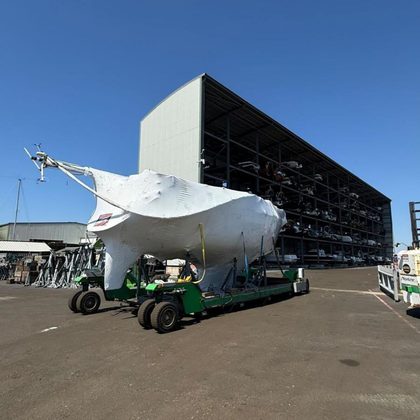
Whether a boat is going by road to the yard, on deck through the Freeport or in a container to another country, the trip is hard on it. A transport cover is shrunk tighter and banded harder than a lay-up cover, so it survives the road, the sea and the lifts in between.
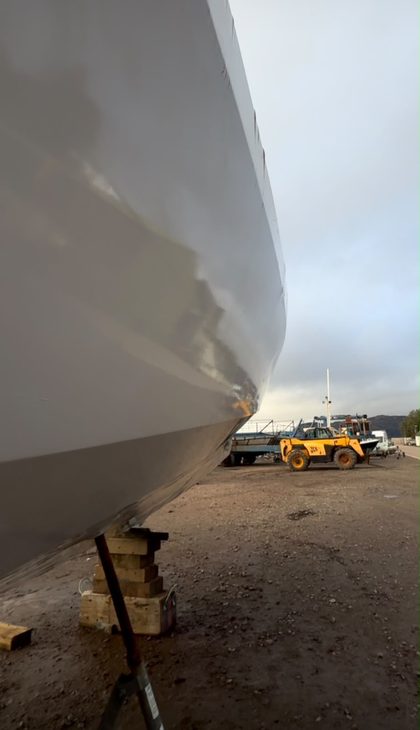
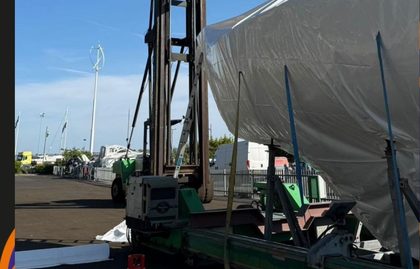
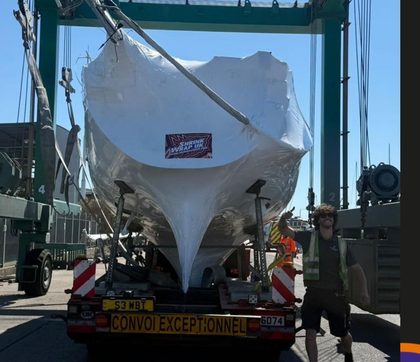
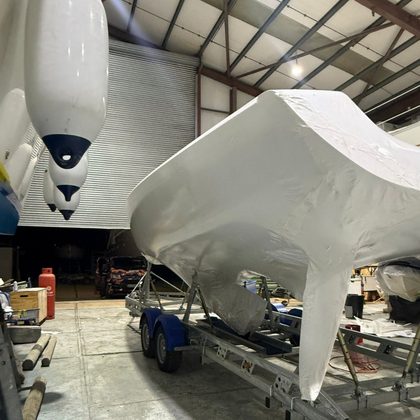
Boats are protected for shipping with a transport-grade shrink wrap cover: film shrunk hard over a frame on the superstructure, banded to the cradle, with lifting points left clear. It keeps road dust, salt spray, soot and condensation off the boat, and has nothing loose to catch the wind at speed or at sea.
How people find us
The shipper handles the ship. We make sure the boat arrives the way it left — sealed, clean, with nothing rubbed through.
Ordinary covers aren’t built for 80 km/h on a trailer or a week on deck. Transport covers are shrunk tighter and banded more heavily.
Salt spray and funnel soot on deck are the big risks. A sealed skin keeps both off, with lifting points accessible.
The process
We fit at the right point — usually at the yard before the road leg — working to the shipper’s dates.
The frame keeps film off windscreens, rails, radar and antennas, which would otherwise rub through.
Film is shrunk tighter than a lay-up cover and banded to the cradle for road speed and wind at sea.
Strops and lifting points stay accessible, so the boat can be lifted on and off without opening the cover.
Options
Yachts and boats shipped on deck through the Freeport.
Smaller boats, RIBs and tenders in containers, with vents and desiccant for long voyages.
Boats moving between yards, marinas and slipways around Malta and Gozo.
Tenders and toys going out to join their yacht somewhere else.
| Compare | Transport cover | Lay-up cover | Nothing |
|---|---|---|---|
| Tension | Shrunk hard for speed and sea | Shrunk for weather | — |
| Banding | Heavy, to the cradle | Standard | — |
| Lifting points | Left accessible | Not needed | Accessible |
| Condensation | Vents and desiccant if long voyage | Vents | Salt and soot on everything |
| Arrives | Clean, sealed | — | Needs a full valet |
Before we quote
For shipments we survey at the yard with the shipper’s dates, before the road leg. We measure the vessel, work out the frame, the film area, the vents and the doors — and the number you get back is the number you pay. No provisional sums, no “subject to access”.
Illustrative figures for an export cover. Your own survey happens on site — or starts from photos, if you’d rather.
Start from your phone
Not every shipment needs a visit to get going. Send a couple of photos and tell us the boat, where she is now, the shipping date and where she’s going, and an installer will tell you what’s involved — including when shrink wrap isn’t the right call.
Whole item in frame, plus one close-up of the access side.
WhatsApp or email, with the boat, where she is now, the shipping date and where she’s going.
Approach, timescale and a price, in plain English.
Finished covers
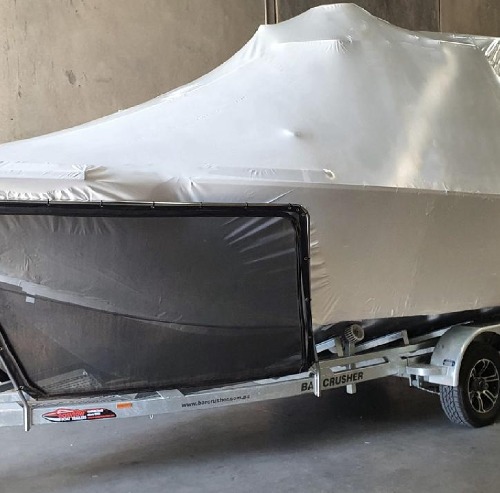
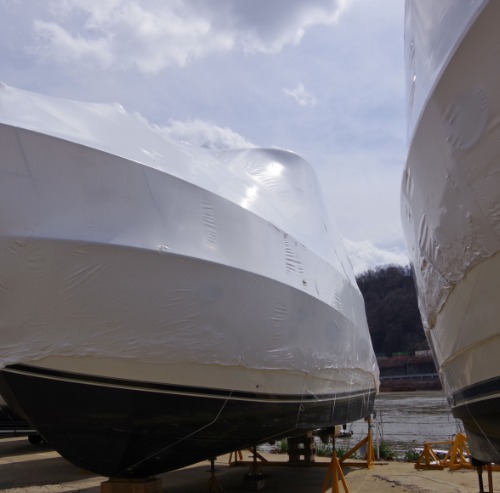
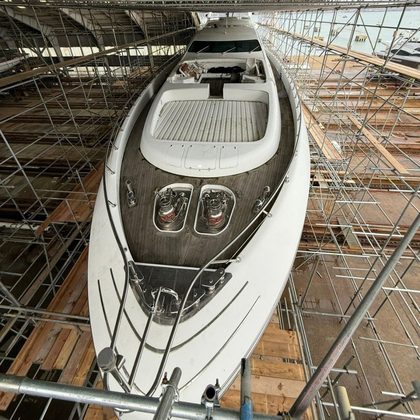
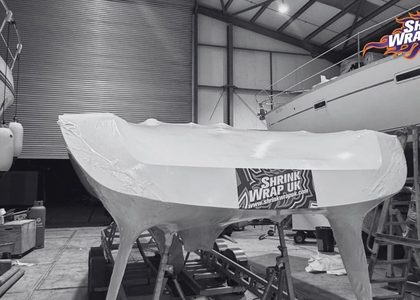
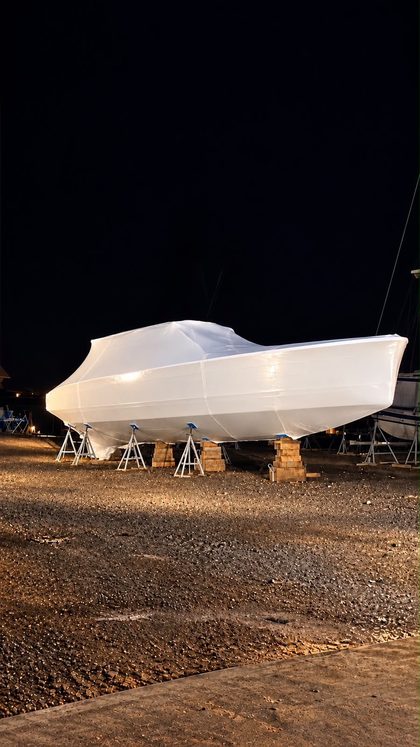
Tight, smooth, framed clear of what it protects and welded into one skin. This is the standard every cover is fitted to.
Questions
Yes — for deck cargo, containers and road moves. We usually fit at the yard before the road leg, so the boat is protected for the whole journey.
Yes. Lifting points stay accessible, so the boat can be lifted onto the ship and off again without opening the cover.
A transport cover is shrunk tighter and banded more heavily than a lay-up cover, and kept clear of anything that could rub through it.
No — that’s the shipper or agent. We fit the cover to their schedule and can talk to them directly.
For long voyages we add vents and desiccant sized to the space, so moisture doesn’t build up inside the cover.
Send a photo, the length and where she is. You’ll get a straight answer on the approach, and a fixed price after the survey.
Quick quote
Tell us what
needs covering.